Skip to content

Dog Nail Trimming and Grinding: What Tulsa Owners Should Know
Why Grinding Matters More Than You Think
Nail grinding for dogs is one of the most effective ways to keep your dog’s nails short, smooth, and safe without the stress of clippers.
Here’s a quick overview of what you need to know:
- What it is: Using a rotary grinding tool to file down your dog’s nails gradually
- Why it matters: Overgrown nails cause pain, alter your dog’s posture, and can lead to joint problems in the wrists, elbows, shoulders, and spine
- How often: Most dogs need nail grinding every 2–4 weeks, depending on size, breed, and activity level
- Key benefit over clipping: Grinding gives you more control, leaves smoother edges, and reduces the risk of cutting the quick
- What you need: A pet nail grinder, high-value treats, styptic powder, and patience
If your dog’s nails are clicking on the floor, it’s already time.
Long nails aren’t just a cosmetic issue. They force your dog to shift weight onto their heels, changing their gait and putting strain on their entire body over time. In severe cases, nails can even curl and grow into the paw pad causing pain and infection. Regular nail care is structural health, not just grooming.
Many dog owners feel intimidated by the process. The noise, the vibration, the fear of hitting the quick it’s a lot to take on. But with the right technique and a little practice, nail grinding can become a calm, even enjoyable routine for both of you.
This guide focuses strictly on the DIY tools and techniques required for at-home paw maintenance. If you are struggling with an anxious dog and need immediate professional assistance, see our Grooming Services page. To burn off your dog’s energy before their next spa day, explore our Daycare and Boarding programs.
Mastering the Dremel: A Step-by-Step Guide
Stepping into DIY grooming can feel like a big leap, especially when power tools are involved. However, mastering nail grinding for dogs is a skill that pays dividends in your dog’s comfort and your floor’s longevity. Whether you are in Tulsa, Jenks, or Bixby, the principles of safe nail care remain the same: patience, the right tools, and a bit of “pro” technique.
Choosing the Right Tool for the Job
Before you begin, you need a grinder that suits your dog’s specific needs. Not all grinders are created equal. When shopping, whether you’re browsing the 628 products listed at big-box retailers or looking for specialized tools, consider these factors:
- Noise and Vibration: This is the biggest hurdle for most dogs. Look for “low-noise” models. Battery-operated grinders are often quieter than corded electric ones, though corded models offer more consistent power for large, thick nails.
- Speed Settings: A two-speed motor is ideal. Use the low speed for detail work and high speed for taking down length on larger breeds.
- Safety Guards: Many pet-specific grinders come with a protective cap that has different-sized openings. These help prevent the nail from slipping and keep fur from getting caught in the rotating bit.
- Weight and Grip: You want something that feels like a thick pencil in your hand. A lightweight, ergonomic design gives you better control.
If you find that your dog’s nails are exceptionally thick or if they have had a traumatic experience with grooming in the past, it might be helpful to read up on Tulsa Dog Grooming 101 to understand how professionals handle these challenges. At Your Dog’s Best Days, we prioritize a stress-free environment, and you can mirror this at home by setting up a dedicated “spa space” for your pup.
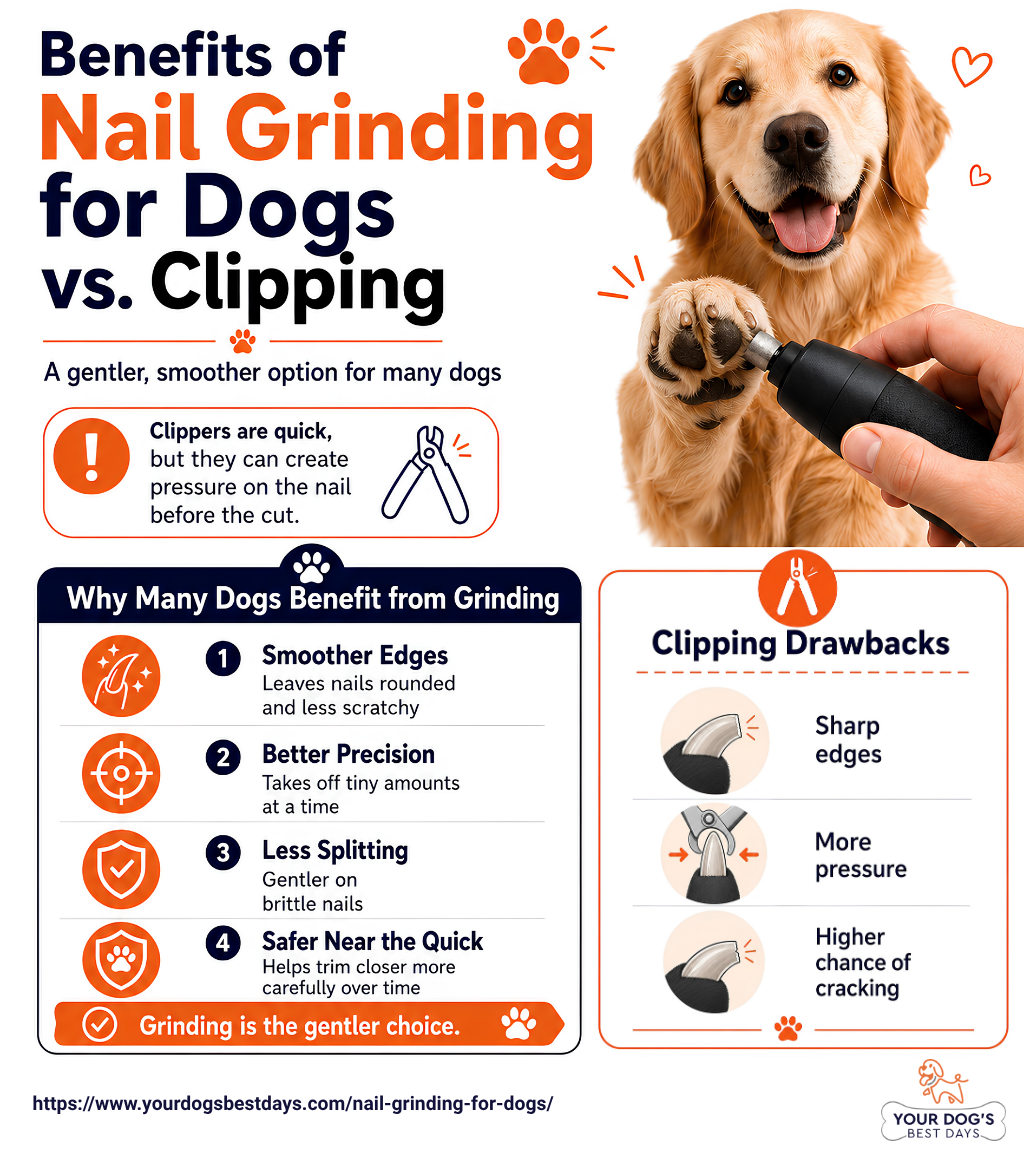
Benefits of nail grinding for dogs vs. Clipping
Why choose a grinder over the traditional guillotine or scissor-style clippers? While clippers are fast, they apply a significant amount of pressure to the nail before the cut happens. This “crush” sensation can be uncomfortable for dogs.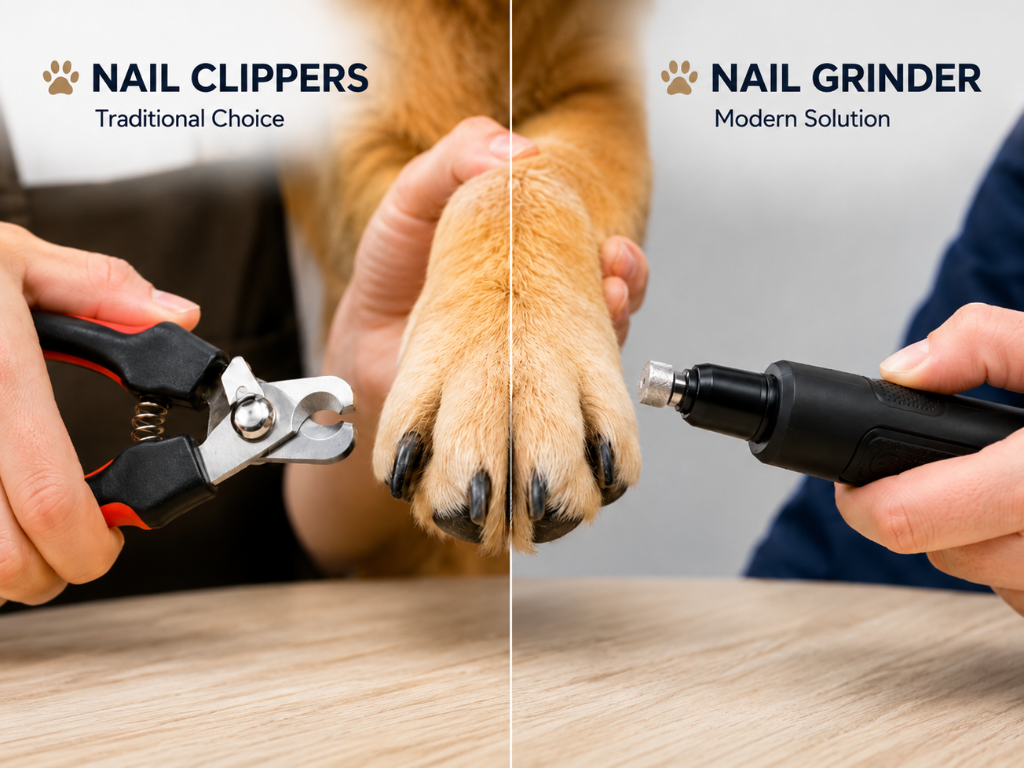
- Smoother Edges: Clipping leaves sharp, jagged edges that snag on carpets and scratch your skin. Grinding files the nail down to a smooth, rounded finish.
- Precision and Control: Grinding allows you to take off tiny “shavings” of the nail at a time. This is much safer than taking one big “snip” where you might accidentally hit the quick.
- Reduced Splitting: High-pressure clipping can cause brittle nails to split or crack. Grinding is a much gentler process for the nail structure.
- Quick Training: According to the American Kennel Club, regular nail care helps the “quick” (the blood vessel inside the nail) recede. Grinding allows you to get closer to the quick safely, encouraging it to move back over time.
Preparing Your Dog for the Grinder
You wouldn’t want someone coming at you with a buzzing power tool without warning, and neither does your dog! Desensitization is the secret sauce to a “drama-free” experience.
- The Introduction: Let your dog sniff the grinder while it’s turned off. Rub it with a treat so they associate the tool with something delicious.
- The Sound: Turn the grinder on while you’re in another room, then gradually bring it closer while feeding high-value treats (like peanut butter or chicken).
- The Sensation: Use the TTouch method specifically “Raccoon Ttouches” to massage your dog’s paws and individual toes. This gets them used to the focused pressure they will feel during grinding.
- The First Touch: Touch the vibration of the handle (not the grinding stone) to their leg or paw so they feel the hum without the filing.
As noted by Little Dog Tips, moving slowly is better than rushing and causing fear. If your dog is particularly anxious, our trained staff is equipped to provide gentle, personalised care for fearful pets.
Safe Techniques for nail grinding for dogs
Once your dog is comfortable with the hum of the tool, it’s time to get to work.
The 45-Degree Angle Method Hold the grinder at a 45-degree angle to the nail. This mimics the natural wear pattern of a dog walking on pavement. Work in short bursts of 1–2 seconds. Grinding generates heat, and holding the stone against the nail for too long can cause a painful burning sensation.
Identifying the Quick
- Light Nails: The quick is the pink area in the center. Stop grinding when you are a few millimeters away from the pink.
- Dark/Black Nails: These are the trickiest. Grind in very small increments. After each pass, look at the tip of the nail head-on. If you see a chalky white ring, you are still in the “dead” part of the nail. Once you see a small, dark, moist-looking dot in the center, stop immediately—that is the start of the quick.
For a detailed walkthrough of these methods, Pet Educate provides excellent visual cues for identifying the quick in dark nails. If you’re ever in doubt, our team at Your Dog’s Best Days is always available to demonstrate these techniques for our local Tulsa and Broken Arrow families.
Maintaining Healthy Paws and Knowing When to Call a Pro
Consistency is the key to maintaining the structural health we mentioned earlier. If you only grind your dog’s nails once every few months, the quick will stay long, and the nails will remain overgrown.
Frequency and Maintenance
How often should you perform nail grinding for dogs?
- Puppies: Every 2–3 weeks to get them used to the habit.
- Small/Indoor Dogs: Every 3–4 weeks, as they don’t wear their nails down on pavement.
- Large/Active Dogs: Every 6–8 weeks, though active dogs in places like Southern Hills or Bixby who walk on concrete may naturally file their nails down.
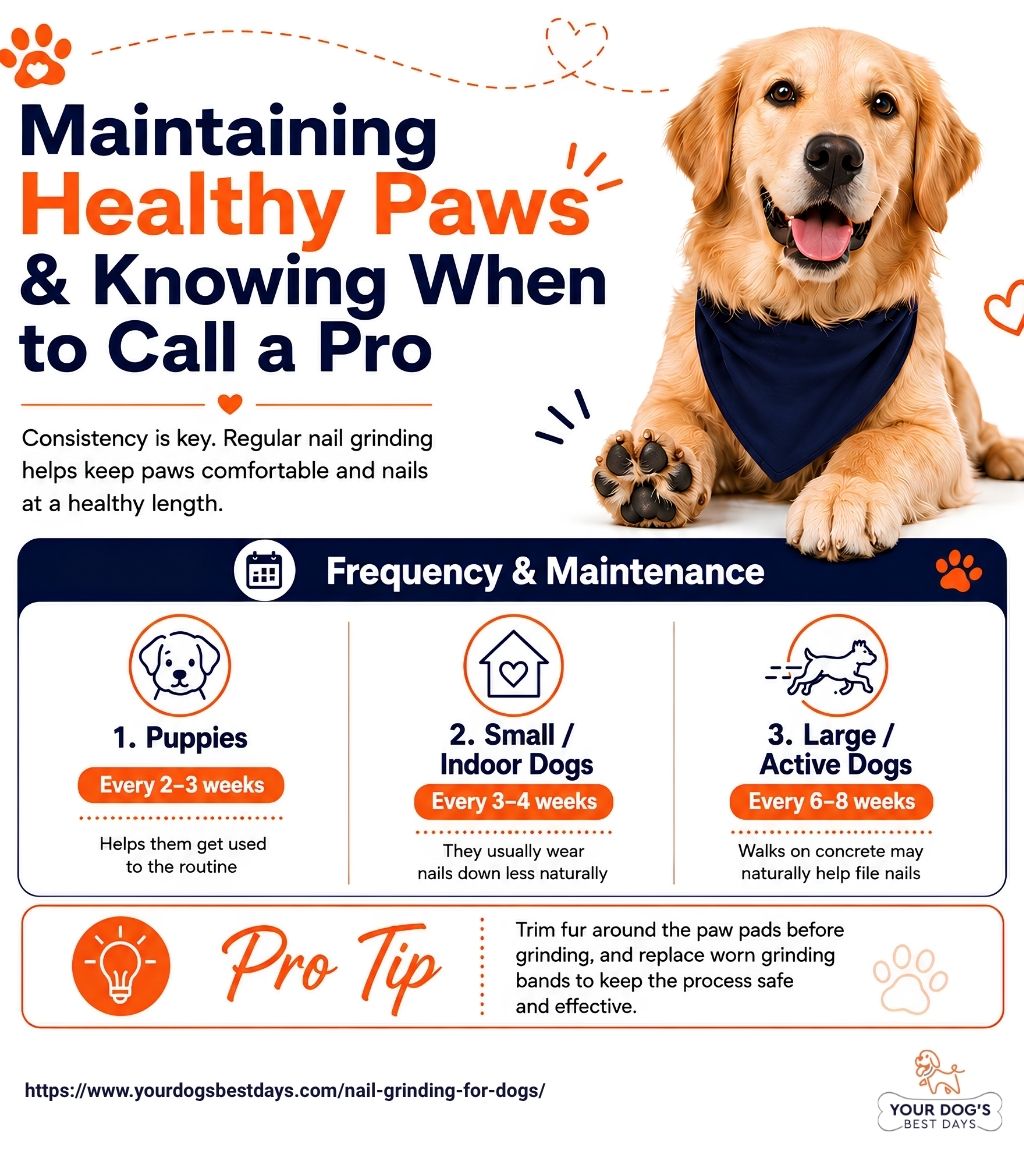
Pro Tip: Always trim the fur around the paw pads and between the toes before you start grinding. Long hair can easily get caught in the rotating bit, which is a scary and painful experience for your dog. You should also regularly check your grinding bands; if they look smooth or “clogged” with nail dust, replace them to ensure they remain effective and don’t over-heat the nail.
Handling Accidents and Hitting the Quick
Even pros have accidents. If you grind too far and hit the quick, the most important thing is to stay calm. Your dog will mirror your energy. If you panic, they will think something catastrophic has happened.
- Apply Pressure: Use a clean cloth to apply firm pressure to the tip of the nail.
- Use Styptic Powder: Dip the bleeding nail into styptic powder (like Kwik Stop) or apply it with a Q-tip. This helps the blood clot instantly.
- Home Remedies: If you don’t have styptic powder, cornstarch or flour can work in a pinch, though they aren’t as effective.
- Reward: Give your dog a “jackpot” of treats to end the session on a positive note, even if there was a minor “ouch.”
If the bleeding doesn’t stop after 10–15 minutes of pressure, or if the nail is torn, contact your veterinarian.
Key Takeaways: Safe Paw Maintenance
Consistently filing your dog’s nails is about more than just protecting your hardwood floors; it is a critical part of maintaining their posture and joint health as they age.
- Desensitize First: Never just turn the tool on and grab your dog’s paw. Spend several days letting them sniff the grinder, hear the motor, and feel the vibration while rewarding them with high-value treats.
- Use the 45-Degree Angle: Always file at a 45-degree angle to mimic the natural wear of the nail, and only grind in 1–2 second bursts to prevent heat buildup.
- Watch for the “Dot”: On dark nails, grind in tiny increments and frequently check the tip head-on. Stop immediately when you see a small, dark, moist-looking dot in the center of the chalky white nail—that is the start of the quick.
- Keep Styptic Powder on Hand: Even professionals accidentally hit the quick occasionally. Having styptic powder ready will instantly stop the bleeding and prevent panic.
- Know When to Call a Pro: If your dog shows severe anxiety, aggressive behavior, or if their nails have curled into the paw pad, stop immediately and seek professional assistance.
Is DIY nail trimming causing too much stress for you and your dog?
If your dog’s nails are overgrown and the grinder is causing anxiety, the expert team at Your Dog’s Best Days can help. Contact us to book a professional grooming appointment at our Tulsa, Broken Arrow, or Jenks locations today, and let us get those paws back in perfect shape safely and calmly.